

The advent of New Year stirs the desire to improve their lives for many people. As such, many imagine themselves thinner, healthier, and generally happier than they were in a previous year. Psychologists agree that it is productive to set goals: attainable, self-improving, and realistic. After all, it is in a human nature to want to improve things and what is the better time than the start of a New Year? However, when did the tradition to set New Year resolutions start? And, more interestingly, what are the most popular goals people generally set for themselves?
The tradition of making New Year resolutions traces centuries back. Historical research shows that ancient Babylonians, Romans, and Greeks made New Year resolutions to help the poor, pay their debts, and be better citizens. The goals of modern people seem to be more egocentric. Generally, people resolve to do the following:
1. Improve themselves physically (lose extra weight, eat more healthily, start going to the gym, abstain from alcohol and cigarettes, etc.)
2. Improve themselves mentally (think positive things, be nicer to immediate family, laugh more, enjoy life and surrounding beauty to a full extent).
3. Improve finances and career (pay the debts, apply for a dream job, perform better at a current job, obtain the long-sought promotion, or establish own business).
4. Get better education (develop a new hobby, learn a foreign language, start reading more, get a college degree, take some classes at a local college).
5. Volunteer (donate their time and effort to a worthwhile cause, help those in need, and get involved into community).
6. Improve themselves socially (meet new people, make a new friend, become active socially, travel).
7. Improve themselves spiritually (attend church more often, pray more, reflect on life).
Interestingly, recent research shows that in previous decades people were more concerned with doing good deeds for others, but nowadays people are more self-involved and mostly concentrate on themselves. Even then, most people fail to follow on their New Year resolutions; according to a study conducted by Richard Wiseman from the University of Bristol, as many as eighty-eight percent of people do not fulfill their resolutions, although initially fifty-two percent of people have absolute confidence in their eventual success.
However, there are ways to achieve success with New Year resolutions. For example, it helps to set them in steps—instead of generally resolving to lose extra weight; it is more productive to say “no” to a pound or two per week. More importantly, it is always easier to do things for others; it fulfills your sense of civic duty, it makes you feel better, and it makes a world a better place. Why not make this year a year to help others?
– Becky Kospanova














 Today I had lunch with 2 of my unmarried friends. One is engaged, one is a mistress, and I have
 Then I share my not so lucky story: When my husband came home I was wearing the black bra, Black stockings, stilettos and a mask over my eyes. When he came in the door and saw me he said, “What’s for dinner, Zorro?” I file for divorce the next day for Emotional & Mental Abuse





 Apart from being a philosophical question, living alone seems to be a practical question for many in Western world. However, first we have to define what it means to live alone. According to most researchers, it means literally living alone: there is no spouse, children, parents, or other relatives living with a person in question in his/her house. It is understandable. Given contemporary economic conditions, many people have to move frequently around the country or world to find a job. As such, close proximity to their families and friends often becomes impossible. A person has to establish a single household. According to Eric Klinenberg, the N.Y.U. sociology professor and author of the book Going Solo, in the 1950s about 22 percent of Americans households were single; nowadays the number is about 50 percent. The increase in single households is quite astonishing.

 It is undeniable that being literate is one of the most important things a person needs to achieve in order to have a normal existence. From everyday things such as reading food labels, medication information, or household bills to more complex tasks such as reading and comprehending books and more difficult texts, reading enables a person to lead an independent and, hopefully, fulfilling life.
 The US Department of Education and National Center for Education Statistics differentiate between three types of literacy, “Prose literacy is the knowledge and skills needed to perform prose tasks (i.e., to search, comprehend, and use information from continuous texts, such as paragraphs from stories); document literacy is the knowledge and skills needed to perform document tasks (i.e., to search, comprehend, and use information from non-continuous texts in various formats, such as bills or prescription labels); and quantitative literacy is the knowledge and skills required to perform quantitative tasks (i.e., to identify and perform computations, either alone or sequentially, using numbers embedded in printed materials).” As such, according to their statistics dating from 2003, 22 percent of adults (those who are 16 or older) in the USA perform below basic in quantitative literacy, 14 percent of adults are below basic in prose literacy, and 12 percent in document literacy.
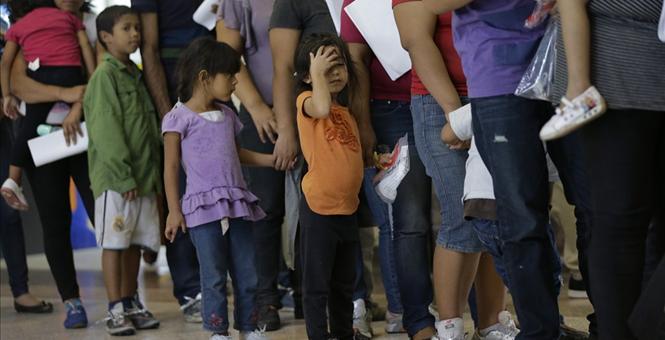
 According to the 1951 Refugee Convention, a refugee is someone who “owing to a well-founded fear of being persecuted for reasons of race, religion, nationality, membership of a particular social group or political opinion, is outside the country of his nationality, and is unable to, or owing to such fear, is unwilling to avail himself of the protection of that country.” As such, asylum seekers differ from refugees in their legal status, i.e. he or she can claim to be a refugee, but unless their claim is definitively evaluated by national asylum centers and they are granted official refugee status, an asylum seeker can be sent back to their home country. To further complicate things, in modern times millions of people choose to migrate in order to seek better opportunities for themselves and their families (for example, the so-called economic migrants), while refugees absolutely have to flee their home countries because of the fear of prosecution. As such, refugees and other types of migrants are subjects to different international and national laws.