
The constant struggle of discovering yourself
 K was a nice guy. He had many friends and many more well-wishers. There was hardly anyone in college who had anything even remotely negative to say about him. He was one of those guys—the one who elicits the jealousy of all those around him because he is so good—in fact, he was the perfect guy. He was courteous and would pull out a chair for a friend, he was chivalrous and would defend any woman and he was fun and would liven up every party. For all those who saw him, he had got everything right. He was just that lucky!!
Very few of us genuinely comprehend the human psyche. It is never as simple as we make it out to be. There are layers and layers of understanding that we never delve into. Everyone faces a dilemma on almost a daily basis. The dilemma is not about the archaic struggle between good and evil or choosing right over wrong. It is something more fundamental.
It is the choice we make that decides who we are. Our identity is the basis for all else that a person thrives on, often referred to as one’s self-esteem, self-worth or self-confidence. Further, one’s identity is never fixed. It needs definition, is fluid and requires to be worked on. Take K, for instance. He was a brilliant guy but that did not mean he had it all easy. He chose to be brilliant every day and every second.
You don’t need K as a case study to know what I am talking about. You experience it everyday. It’s just that you don’t realize what this decision-making entails. The dilemma is so instantaneous and short-lived that to imagine its effects over something as essential as one’s identity is incomprehensible, and rightly so!
To want to have another drink when you know you can’t hold your drinks, to be nice to someone when you believe that they deserve otherwise, to keep your voice low so as to not step out of the boundaries of a civilized argument…when have we not found ourselves in some or all of these situations?
If you are known for your self-control, you would want to hold back on your drink and when you are known to be aggressively rude, you would scream and curse even when you are in the wrong. Really, this is all about how you see yourself.
A lot of teenage angst is directed towards exactly such a crisis. How to achieve an equilibrium between how the world sees me and how I want to be seen? This is the eternal teenage dilemma, though it never really goes away because it can’t. And this is because you can never fully create a defined bounded identity for yourself that corresponds perfectly to how people see you and remain satisfied with it. It just can’t be.
There is a very powerful saying, “You are what you pretend to be!” You cannot escape the demands that society makes on you, but you must live with them. These demands shape you into what you are here and now.
A lot of teenagers face this problem. This stage in their lives is especially precarious for them as they do not know what to do. They observe everything around them and want to imitate what they see, believing those behavior patterns to be correct. Cheerleaders are popular and jocks are famous—it’s perceptions like these that color their vision of life. They are also too young to risk breaking a behavior pattern, so they mold themselves into that pattern. Some succeed, while others fail.
K had a very close friend called J. They had been friends for the longest time. Their first memories were that of playing together even as little children. They had faced all of life’s experiences together—their first low score, their first crush, their first love disappointment—they were together in everything.
However, to an outsider who did not know the dynamics of this relationship, it seemed highly improbable that there was so much in common between K and J because they were so different from each other. J was the Oxford definition of an introvert. He rarely talked and avoided crowds. He was one of those guys who passed by you unnoticed more often than not.
What was J afraid of—company, friends or conversations? None of these—J was afraid of being vulnerable. He was afraid of putting himself out there and then being judged for it. He was a regular smart kid. But for all his intelligence, he could not comprehend why anyone would jump to label him as one kind or another the moment he chose to talk.
However, what he didn’t realize was that this labeling was almost a reflex action, at least for most teenagers. And by not speaking in public to those around him, he was being labeled an introvert anyway.
It wasn’t as if J didn’t care of the world’s opinion of him. How could he not care? After all, K was his closest friend and the obvious difference between them was difficult to ignore. He saw how K mingled with all kinds of people, was loved by everyone and was popular everywhere. And then he saw that he was just the opposite—he wasn’t loved by those around him. On the contrary, J did care but didn’t know how to express his feelings.
The point is not to give the reader a powerful insight into how to solve the ever-present teenage dilemma because this isn’t possible. You cannot have a magic potion that tells you exactly who you are supposed to be and should be. That is something you have to find out for yourself. The point is to not give up the fight, nor to give in. This dilemma is natural and almost normal. Live it through and someday you will be able to confidently say, “I am what I am!”
PS: J and K both grew up to extremely successful gentlemen with loving wives and beautiful children. Most importantly, their earliest memories were still those of them playing together!

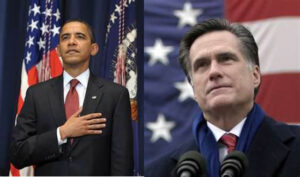 In several days, on November 6, 2012, American people will choose their 45th President and the Electoral College election will take place on December 17, 2012. The race between Democratic current President Barack Obama and Republican nominee Mitt Romney is rather close – different polls alternatively show one or another candidate leading by just few points, and it is clear that the outcome of election greatly depends on such factors as voters’ turnout, undecided voters, and swing states. Moreover, the recent tragedy of superstorm Sandy might also influence the results of the election by affecting early voting results, preventing people from voting altogether, or making them change their choice based on perceived ability of President Obama to handle the crisis of such enormous magnitude.
 On November 6, 2012, American people will vote to determine who is going to be the President and the Vice-President of the USA for the next four years. The main choice is between present Democratic President Barak Obama and his Vice-President Joe Biden and Republican Mitt Romney, former governor of Massachusetts, and his Vice-President nominee Paul Ryan. However, there are two other candidates who have achieved ballot access sufficient enough to win the election by the majority of the Electoral College: the Libertarian nominee and former New Mexico Governor Gary Johnson and the Green Party nominee Jill Stein. Still, many people do not fully comprehend what Electoral College is and how it influences the outcome of Presidential elections.
 There are many critics of the Electoral College system. Many people argue that the true voice of American people gets lost during the Presidential elections and the outdated Electoral College system does no longer reflect the real choice of general population. This critique is not without some basis. Everybody remembers the Presidential elections of 2000 when Al Gore lost the election race to George W. Bush despite gaining the majority of popular votes but losing the Electoral College votes. Bush had won 271 electoral votes while only getting 50,456,002 popular votes and Gore had won 50,999,897 popular votes but only 266 electoral votes. However, it was mostly an exception rather then the rule. So far, the same situation has happened only two more times in history when Republican candidate Rutherford B. Hayes won the elections against Democrat Samuel Tilden in 1876; and Republican Benjamin Harrison won the elections against Democrat Grover Cleveland in 1888 on the basis of electoral votes.
 Before unraveling the path-breaking algorithm that effectively produces smart ideas, let’s make an attempt to alter your perspective towards genius people. When you think of great legends like Albert Einstein, Thomas Edison, Isaac Newton, Steve Jobs or other innovators, what is the general notion defining their high intelligence quotient? Yes, of course you relate it to some super-powers, which they might possess. This is not because you resolutely believe in myths but because it’s a human tendency to presume extraordinary things as myths rather than accept the blunt reality that such things can be possible without anything supernatural. It just seems easier to judge this way, isn’t it? Apart from this confusion between myth and realism, there also lies a perception that geniuses exhibit unusual behavior and eccentric habits, which make them, stand out of the rest. No, none of it is true.
 cause of some special genes but of the unfamiliar mind strategies used by them. These tricks don’t obey the rules of the general norm, but anyone who is aware of it can gradually master it. So, this is the perspective you need to hold on to till you discover the steps that lead to an estimated mastermind outcome. Now it is far more empowering and motivating to believe that such innovations are rational and not mythological. It is indeed thrilling that some nifty skills can push the boundaries of inventiveness. Take this as an inspiration that each one of us can be revealed to a better thinker suppressed inside us just by intentionally positioning our mind on the lines of ingenuity.
 It has been observed over the years by researchers that innovation is not the end result of a genius attribute instilled in a person. The reason why some people generate such rich ideas is because they make intentional efforts and as anticipated it leads to a splendid invention. The method is simple, it just requires you to be focused and exercise your brain as directed. Try the following steps:
 Aboriginal women at this time also lost their artistic practices, which was a deeply religious and spiritual practice. Their artwork symbolized their culture, their lives and told of dream-time stories that were passed onto their children. Art was a form of worship, central to their beliefs, and this too was stripped from them.
 Aboriginal women had a significant role before the colonization of Australia as all indigenous female lived their daily lives independent from men. In addition, they were economically independent and had status and value within the community. For example, they produced 80% of the diet and played a key role in the socialization and education of the children. They passed on information about indigenous tribal law and vital kinship structures that influenced social behavior.
 the same card. However, in a modern world, the looks can matter a lot. It was statistically proven that better-looking and taller people earned more compared to their less fortunate in the looks department and shorter colleagues, no matter the qualifications. It is just simple human psychology – people like good-looking and tall people, they appraise them more favorably, and they tend to grant them more favors than to worse looking people.
 The question stands now if it really matters how you look and how tall you are. In my honest opinion, it does matter how you look because it projects a certain image about you to an outside world. If you are fit, well cared, healthy, and well groomed – it shows determination and, basically, respect for what you’ve been given.
 One of the basic characteristics of people in any country and at any age is the tendency to develop stereotypes about particular groups or classes of people. Webster dictionary defines stereotypes as “conforming to a fixed or general pattern; especially: a standardized mental picture that is held in common by members of a group and that represents an oversimplified opinion, prejudiced attitude, or uncritical judgment.” While some stereotypes can be positive (such as “all babies are cute,” “all Hispanics are family oriented,” “Asians are good at math,” , etc.), majority of them are not and can lead to unnecessary misunderstanding and unfounded judgment.

 Right from birth, each one of us has evolved into a set pattern of human traits; the major constituents being the variation in mind-set, opinion and behavior. These three elements blend together to lay the foundation of the personality type we possess and showcase in our daily lives. Just by observing the known and unknown people around us, it can be inferred that each person is born with a unique vibe. If their actions are in-tune with ours, there is a strong bond of compatibility formed. But in cases of disparity like the two extremes (introverts and extroverts) stumbling upon each other, major survival issues and acts of repulsion are observed. This happens because of their intolerance towards each other’s contrasting traits.
 For Introverts: Being in a state of solitude suits you the best but don’t let this seclusion keep you trapped without having any connection from the external world. Experiencing the social world once in a while is not that terrible after all. Try to spare some time to socialize with people and let them recognize that concealed fun side of you.



 chatting with friends and suddenly you realize that you heard this conversation before. You know exactly where the discussion is leading too and what will be said. Or you visit a place for the first time and that feeling comes over you that you have been there before. It’s not surprising if you are also one of the 70% of the people who claim to have gone through what some would considered a bizarre experience. The reasons and why this happens is a mystery that still continues to go through numerous theories and studies by and between several groups of people. Psychoanalysts explain this as a method of fantasy fulfillment while Psychiatrists describe it as a short circuit occurring in the brain when an event makes its way into the memory, just a split second before you become mentally aware of the event.

 Part 1
 For the first 13 Olympiads, only races were held; but over the years, other sports such as pentathlon (which included sprint, wrestling, javelin, jumping, and discus) and pancration (combination of wrestling and boxing) were added. At first, only Greeks were allowed to compete but eventually, athletes from Roman Empire were allowed to participate as well. After the Roman victory over Greece in 100 BC, the initial emphasis on personal honor, physical strength, and achievement gave way to glory-seeking and Olympic spirit deteriorated. In 394 AD, the Christian Roman Emperor Theodosius the First abolished the Olympic Games because he believed that they were the manifestations of pagan beliefs.
 also a great opportunity. Our days are typically crammed with tasks and technology. How often do you get a few minutes to yourself (not counting watching TV, being on the computer or listening to your iPod)? Just a few minutes to actually sit in silence and gather your thoughts can help. If that doesn’t sound appealing, use the time to call and catch up with a loved one or to listen to calming music or a new audio book. The key is to accept that at this very moment, there’s nothing you can do about all the congestion. Many of us sprint through our days. Traffic – though upsetting — gives us the opportunity to slow down and do something more pleasant than stew in our seats.
 Another tip: As you feel the rage for a slow employee rise, try to muster up some empathy. No doubt at some point in your life you were slow at a new job (or in another situation). Rather than getting angry put you in their shoes. Anger ignites impatience. But empathy can ease irritation, and help patience prosper.
 Seek patience
 The development of technology for the last few decades is truly impressive. In particular, cell phones, which were first introduced in the 1980s and has made a spectacular jump from simple devices intended for just talking to multi-purpose gadgets. Nowadays, smart phones can be used by their owners as computers to surf the web, video and photo cameras, music players, calendars, gaming systems, GPS navigators, and much more. Of course, all these additions while very convenient may come with a price.
 provide.
 Someone please tell me what the Hell’s is wrong with the people that run this country, Republicans and Democrats alike. When the Democrats had control of the House and Senate; they were not able to accomplish much as they were to busy in fighting amongst themselves and letting the people who really needed their help down.
 He ordered his eldest son, his nephew, and his second wife put to death. He tortured, murdered and imprisoned anyone, including cousins and former friends, known or suspected of being political rivals. He issued an edict on religious freedom for all in his dominions yet dismantled temples and looted their treasuries. He proclaimed himself a follower of the Prince of Peace, yet his path to undisputed power was littered with battles, great and small.
 authorities had launched a systematic assault to suppress Christianity. It was a time referred to by members of that community as the “Great Persecution.”