

 While it might seem implausible today, but not until very long ago it was illegal to marry someone from a different race in the United States. Only on June 12, 1967 in the landmark case Loving vs. Virginia, the Supreme Court of the United States unanimously ruled that anti-miscegenation laws were unconstitutional. As the court stated, “Marriage is one of the ‘basic civil rights of man,’ fundamental to our very existence and survival…. To deny this fundamental freedom on so unsupportable a basis as the racial classifications embodied in these statutes, classifications so directly subversive of the principle of equality at the heart of the Fourteenth Amendment, is surely to deprive all the State’s citizens of liberty without due process of law. The Fourteenth Amendment requires that the freedom of choice to marry not be restricted by invidious racial discriminations. Under our Constitution, the freedom to marry, or not to marry, a person of another race resides with the individual and cannot be infringed by the State.” With that ruling, many people were finally free to marry whomever they wanted—no matter their race and ethnic background—with no fear of being legally prosecuted for their actions.
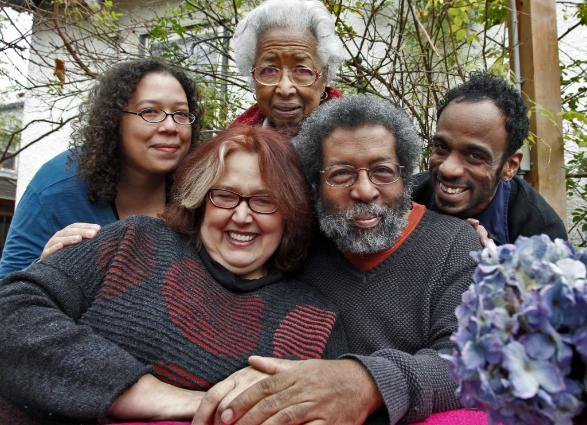 Anti-miscegenation laws were adopted in the United States since 1660s—first in Virginia and Maryland and later in all the original thirteen states—to prohibit people from entering into interracial (i.e. between white and non-white people, mostly blacks, but sometimes Native Americans and Asians) marriages, sex, and cohabitation. As a trial judge in Lovings vs. Virginia case asserted, “Almighty God created the races of White, Black, Yellow, Malay, and Red… and He placed them on separate continents…And but for the interference with His arrangement there would be no cause for such marriages…The fact that He separated the races shows that he did not intend for the races to mix.” As such, the sentiment against interracial marriage ran deep within the American population, especially in the South. For example, in 1958 Gallup polls as many as 96 percent of white Americans were against interracial marriage. However, starting in the 1960s this attitude started to change and today we have a society in which interracial marriages are no longer taboos.
 According to 2010 census, almost 15 percent of marriages in the United States were interracial. There are many configurations of interracial marriages in the country, some of which are more prevalent and some are less so. For example, 9.4 percent of whites, 17.1 percent of blacks, 25.7 percent of Hispanics and 27.7 percent of Asian
s married someone outside their race. Some of the combinations are more prevalent while others are rarer (for example, white male/asian or black female are much more prevalent than asian male/black female). In any case, given the melting pot which the United States is made of, it is not surprising that interracial marriages are on the rise.
 Interracial marriage is still a hot topic for many people. Whether you are pro- or against them, there is a good chance that you will encounter different races’ couple in the course of your life. No matter what one’s beliefs are, one needs to be respectful and treat interracial couples no different from others. Today, when the boundaries between ethnicities and races become more and more obsolete, one can envision a future where race and nationality do not play a role at all. In The Time Will Come That Everyone On Earth Will Be A Shade Of “Beautiful Beige”



 However, if one approaches the decision to attend community college with due diligence, he or she can certainly be assured that they can present an excellent basis for a lifetime of gainful employment and good earnings. First of all, the cost of attending community college is much less than the one associated with four-year colleges (generally, it is about tenth of the amount). Also, community colleges offer greater flexibility and students can work full-time while taking classes—another huge financial incentive.













 Modern people live in stressful times. We are constantly barraged by new information, connected to our devices such as phones and computers, and have too little time for anything else except our jobs and household chores. Realizing the pressure of everyday lives, many people do their best to stay healthy by eating right, exercising regularly, and avoiding bad habits such as smoking and drinking alcohol. However, some people take their healthy habits too far by exercising excessively, adhering to very restrictive diets, or taking too many vitamins and different supplements. Many well-regarded studies have shown that such behavior, instead of making one healthier, might in fact harm one’s well-being.
 To illustrate, high levels of omega 3 fatty acids can lead to weakened immune system, too much vitamin C and calcium can cause kidney stones, excessive zinc can cause many undesired effects such as vomiting, diarrhea, and lowering of bad cholesterol, and excessive iron can build up in tissues and organs such as heart and liver. Consequently, it is much better to commit to eating healthy combination of vegetables, proteins, and good carbs than risk overloading one’s system with unnecessary, and potentially hazardous, nutrients. Very strict diets also negatively affect peoples’ health by depleting their bodies of essential nutrients.
 Cheap labor along with preventing voting rights now days or at the forefront of many legislators actions in congress today according to major media outlets, and is considered to be the driving force behind conservative agendas. Many state’s governments leaders allegedly are accused of gerrymandering senate and congressional districts maps in order to control minority voting by legislators, and is under investigation by the US Justice Department, mainly in the south prompted by the midterm elections of 2012. Several states maps were order to be redrawn by federal courts as a result that election according to Associated Press reports.
 For centuries, the only way to communicate with people at distances or record one’s thoughts and experiences was to put things in writing. Although it might seem that writing had existed as long as humankind itself, it was certainly not the case. The history of writing is a long and fascinating one, starting with primitive drawings on the walls of caves and rocks and gradually developing all around the world in different forms such as pictographic, hieroglyphs, and finally to the earliest known alphabetical systems such as Proto-Sinaitic, Ugaritic, Egyptian, and Phoenician which were dated to about 3500-3000 years ago. Over the time, the materials for writing have changed, the writing instruments have changed, the subject matters have changed, but the enthrallment of people with writing itself has always been constant.
 Ex-Wife & Ex-Husband
 On November 4, 2014, midterm elections will be held in the United States where all 435 seats in the United States House of Representatives; 33 out of 100 seats in the United States Senate (plus three more seats up for special election); as well as 38 state and territorial governorships and 46 state legislatures will be contested. The main question for most people is whether the Democrats will be able to keep their majority in the Senate because it would determine the policies of American government to a great extent in a foreseeable future. However, there is another exciting development related to it because the upcoming elections present an unprecedented opportunity for more women than ever to rise to political power.
 One of the most frequent questions any married couple receives is, “Do you have kids?” and if the answer is negative, the inevitable follows, “So, when are planning to start having kids?” It is not surprising, of course. For centuries, marriage and parenthood were practically synonymous and—provided a couple did not have fertility issues—it was taken for granted that at some point they would have children. However, nowadays more and more people make a conscious decision not to have any children. For example, Pew Research Center found out that the value of having children in order to have a fulfilling relationship is gradually declining over years. To illustrate, 65% of people in 1990 agreed that children were important to relationship, but in 2007 only 41% did so. Consequently, nowadays every one out of five women of childbearing age does not have a child compared to one out of ten in 1970s (US Census Bureau).
 There is a certain stigma many people, especially women, carry if they decide to not have a child. They are often considered to be selfish and self-centered when compared to their counterparts with children. However, numerous studies have shown that while conventional wisdom dictates that children bring happiness to parents, things might be in fact different. Quite often, people without children report better satisfaction with the quality of their lives than people with children. For example, they have more money because childrearing is expensive; they are able to do many things such as traveling, working more hours, having time to pursue their hobbies and volunteering; they are able to focus on their partners more and, subsequently, have better relationships; and they are generally less stressed than people with children.
 Just a few decades ago it was socially and culturally unacceptable, or at least frowned upon, for couples to live together without being officially married. However, nowadays it is not only a common occurrence, but the trend is actually on the rise. For example, there were about half a million unmarried couples living together in 1960, by 2000 there were about 4.75 million unmarried couples, and by 2013 the number of such unions grew to a little bit over an eight million (which is an astonishing 1500 percent increase over the last half a century). What are the reasons for such a change and what impact does it have on a society as a whole?
 However, the evidence shows otherwise. According to National Marriage Project, couples which cohabitate report less satisfaction with the quality of shared life than their married counterparts; they break up more often and more easily; if they eventually get married, the rate of divorce among those who cohabitated previously to getting married is 46 percent higher than among those who did not cohabitate before the marriage; and it has an adverse effect on children. Why does it happen? Some researchers have suggested that people who decide to cohabitate rather than marry may already have lower commitment levels to their partners and, therefore, are more likely the end their relationship if something does not go the way they want. It holds especially true for those who cohabitate multiple times because they become more “habituated” to the idea of abandoning the relationship at the sight of trouble. In contrast, married couples are usually committed to long-term relationships and are decidedly more willing to find solutions to their problems such as improving their communication, seeking counsel, etc. Also, it has been suggested that when people choose to cohabitate, they do not apply the same criteria to their partners which they would have applied if they were choosing a marriage partner. Without a clear long-term commitment, people often get involved with “good-enough” partners, thus further diminishing the perspective of long-term and stable relationship.
 The 2013 year was a year full of events: from serious ones such as the U.S. government shutdown, contentious introduction of the Patient Protection and Affordable Care Act (or commonly known as ObamaCare), and a NSA spying scandal to some rather silly ones such as perplexing popularity of “twerking” incessantly perpetuated by the infamous Miley Cyrus, the widespread posting of “selfies” which once again brought down former governor of New York Eliot Spitzer, and the unfortunate drug habit of Toronto Mayor Rob Ford.